

Artificial intelligence is expanding at an unprecedented pace, and Europe is witnessing a remarkable acceleration in AI-driven innovation. Belgium is emerging as a particularly strong contender in this landscape because of its digital infrastructure, central geographic position, and rising concentration of tech-focused organisations. As AI adoption grows, companies and research teams increasingly require dependable, high-performance compute resources. This demand is especially strong for workloads such as deep learning, large-scale data modelling, simulation, and real-time inference.
For many Belgian teams, the ability to access scalable and reliable compute directly determines the success of AI initiatives. This is where evaluating the leading GPU cloud providers in Belgium becomes essential. Organisations across sectors are moving beyond traditional cloud setups and shifting toward flexible on-demand GPU resources that deliver the performance needed for modern AI workloads. As training runs become more complex and inference demands increase, businesses are seeking high-quality GPU server hosting in Belgium and nearby European regions.
The need is shaped by several AI-driven changes happening in Belgium today.
Some of the most influential trends include:
- Increased use of machine learning in banking and fintech
- Rapid growth of AI startups in Brussels, Antwerp, and Ghent
- University-led research in biotechnology, NLP, robotics, and climate modelling
- Greater reliance on GPUs for enterprise analytics and automation
- Adoption of generative AI by creative industries and digital agencies
These trends create consistent pressure for scalable compute infrastructure that remains fast, compliant, and cost-efficient.
Belgium’s position in the European datacenter ecosystem also plays an important role. The country benefits from strong connectivity to major hubs such as Amsterdam, Frankfurt, and Paris. This proximity is valuable because many organisations require regional GPU capacity that balances performance with data-residency requirements. A quick comparison illustrates the strategic advantage:
| Region | Relevance to Belgium | Typical Use Case |
|---|---|---|
| Belgium | Ideal for low-latency workloads with strict compliance needs | Real-time inference, sensitive data processing |
| Netherlands | Large supply of compute with excellent networking | Training large models, experimentation pipelines |
| Germany | Strong compliance posture and enterprise-grade infrastructure | Regulated industries, financial institutions |
| France | Expanding AI ecosystem with competitive GPU capacity | Cross-border research and collaboration |
At the same time, Belgium faces challenges that make choosing the right provider more important than ever. The global GPU shortage has created noticeable pricing instability, and access to high-end GPUs like the A100 or H100 remains limited. Organisations often experience long waiting times, fluctuating availability, and unpredictable cloud bills when working with general-purpose cloud platforms. These issues highlight the need for a more specialised approach when evaluating GPU cloud providers in Belgium.
Because of these factors, organisations increasingly seek providers that offer:
- Transparent pricing for GPU compute
- Stable access to modern hardware
- Compliance with EU data-residency requirements
- Low-latency deployment options within or near Belgium
- Reliable, uninterrupted access to on-demand GPU resources
- Streamlined GPU server management and provisioning
This blog explores the top solutions available today and provides a clear, research-backed comparison of each provider. It also examines common challenges in the Belgian GPU cloud landscape and how modern platforms, including Dataoorts, help overcome them.
Why Belgium Needs Reliable GPU Cloud Solutions
Belgium’s digital economy is entering a phase where high-performance compute is no longer optional but foundational. Modern AI systems require consistent access to GPUs for training, fine-tuning, inference, and data-intensive simulation. As Belgian companies become more ambitious in their AI initiatives, the demand for reliable cloud-based compute infrastructure continues to accelerate.
The need is driven not only by innovation within the country but also by Belgium’s strategic position inside Europe’s broader AI ecosystem. Local organisations increasingly want infrastructure that offers the performance of global providers while maintaining the compliance, latency, and cost control advantages of operating within the EU.
The Real State of GPU Availability in Belgium
Belgium’s AI ecosystem is expanding, but the availability of high-performance GPUs has not kept pace with the rising demand. Local enterprises, research institutions, and AI startups frequently report delays, capacity shortages, and high rental costs when trying to scale compute-intensive workloads. Unlike larger digital economies, Belgium still depends heavily on imported compute infrastructure and relies on a few dominant cloud providers whose on-demand GPU pricing has increased rapidly.
Belgian companies today face three immediate challenges.
First, GPUs such as the A100, H100 and L40S remain limited in supply due to a constrained European pipeline.
Second, enterprises that need short-term or burst-capacity compute often have to wait for availability windows on mainstream clouds.
Third, even when capacity is available, pricing volatility makes it difficult for teams to forecast training budgets for large-scale AI models.
Key pressure points affecting Belgian users include:
- Limited supply of high-end GPUs during peak demand cycles, especially for research and generative AI training.
- High cost per hour on mainstream hyperscalers creating budget overruns.
- Slow provisioning times for GPU clusters due to regional shortages.
These bottlenecks have slowed down experimentation cycles for AI builders, and many teams have been forced to extend their project timelines or reduce model sizes to match available compute.
Compliance and Data Residency Challenges in Belgium
For many organisations in Belgium, compliance is just as important as raw performance. The European Union’s General Data Protection Regulation (GDPR) imposes strict rules on how sensitive data can be processed and stored. This creates a specific requirement for GPU cloud infrastructure that can guarantee data residency within the EU, and preferably within Belgium itself for critical workloads.
International cloud providers often host GPU clusters in multiple regions, which can inadvertently place sensitive datasets outside of EU jurisdiction. For companies dealing with financial records, healthcare data, or proprietary research, this represents a significant risk. Maintaining local or EU-based GPU server hosting ensures that data remains under European legal frameworks, reducing compliance concerns while simplifying audits and reporting.
Additional considerations include:
- The need for transparent control over where training datasets and model outputs are physically stored.
- Ensuring encryption and secure networking meet EU standards.
- Guaranteeing that any third-party cloud provider adheres to GDPR obligations for data handling, processing, and retention.
As AI workloads become more complex and sensitive, Belgian organisations are increasingly prioritising providers that combine high-performance on-demand GPU access with strict compliance. Choosing a provider that cannot guarantee local data residency may compromise regulatory adherence and expose the organisation to legal risks.
Latency, Regional Proximity, and Performance Considerations
Belgium’s central location in Europe offers significant advantages for AI and high-performance computing workloads. Being close to major datacenter hubs in the Netherlands, Germany, and France allows organisations to benefit from low-latency connections and robust network infrastructure. However, relying solely on neighbouring countries can introduce subtle performance trade-offs, particularly for time-sensitive or high-throughput tasks.
For Belgian teams running large-scale machine learning models or real-time inference applications, even small latency increases can impact overall system performance. This is especially relevant when AI models require frequent access to large datasets stored in local servers or when multiple GPU instances need to communicate efficiently for distributed training.
Key factors influencing performance include :-
- Physical proximity of GPU servers: On-demand GPU resources hosted within Belgium provide the lowest latency, which is critical for interactive or real-time AI applications.
- Network reliability: Connections to nearby EU data centers are generally stable, but cross-border routing can occasionally introduce bottlenecks during peak usage periods.
- Data transfer speed: Large-scale model training requires fast read/write access to storage. Providers that locate GPU clusters close to the data sources reduce the overhead and accelerate training cycles.
Belgian organisations thus face a trade-off: choosing between immediate local availability with potentially higher costs or slightly more distant EU providers with lower prices but increased latency. This balance is a key factor when evaluating GPU cloud providers in Belgium and selecting the right GPU server hosting in Belgium for production workloads.
Providers that can guarantee high-performance on-demand GPU access within Belgium or nearby EU regions offer a strategic advantage, reducing delays and enabling faster, more reliable AI operations.
Key Problems with GPU Rental and On-Demand GPU Cloud in Belgium
Belgium’s AI and high-performance computing landscape has grown rapidly, yet many organisations face significant challenges when trying to access GPU resources. Even as the market expands, local availability, pricing, and reliability issues continue to create friction for teams relying on cloud-based compute. Understanding these problems is critical for making informed decisions about GPU cloud providers in Belgium or GPU server hosting in Belgium.
Below is a structured overview of the main problems faced by Belgian teams using GPU cloud providers in Belgium or relying on GPU server hosting in Belgium.
1. High and Volatile GPU Pricing
High-performance GPUs, such as NVIDIA A100 and H100, are in limited supply across Europe. Belgian teams often experience premium pricing that fluctuates with global demand.
- Organisations struggle to forecast budgets accurately because GPU rental costs can change from week to week.
- Startups and research teams with constrained budgets may need to reduce model complexity to stay within cost limits.
- The unpredictability of on-demand GPU pricing slows experimentation and planning for AI workloads.
2. Limited Local GPU Capacity
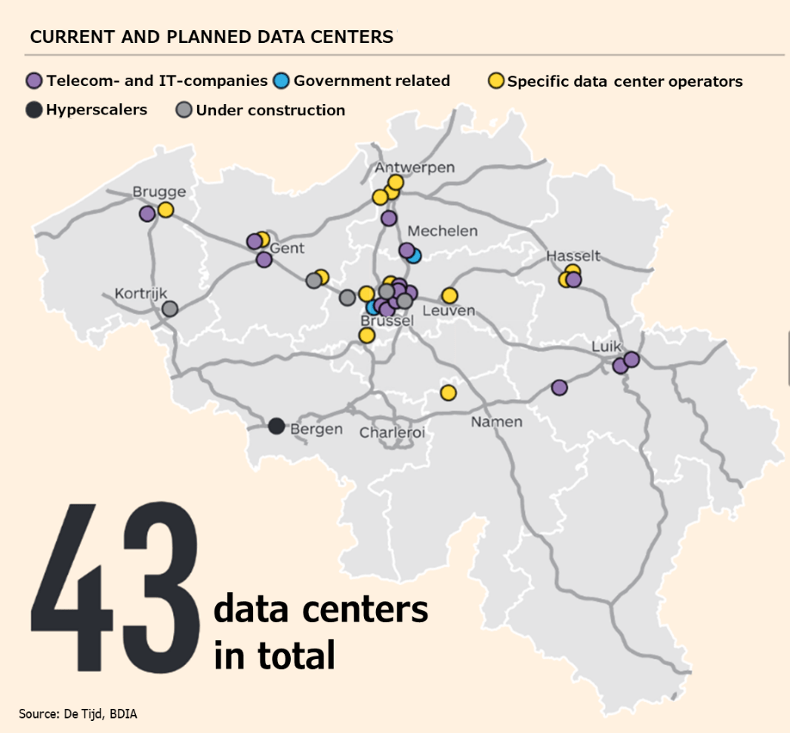
Belgium has relatively few large-scale GPU data centers. Most capacity is concentrated in a small number of cloud providers, leading to competition for resources.
- Teams may face delays in provisioning GPU clusters, which slows down AI training schedules.
- Some organisations are forced to deploy workloads in neighbouring countries, increasing latency and operational complexity.
- Limited local GPU availability can create challenges for latency-sensitive applications and production inference pipelines.
3. Preemption and Spot-Instance Risks
Many cloud providers offer cost-saving spot or preemptible instances. While cheaper, these resources can terminate unexpectedly, disrupting workloads.
- Long-running AI training jobs may be interrupted, forcing teams to restart processes and wasting compute hours.
- Preemptible instances are unsuitable for critical production inference tasks that require consistent uptime.
- Teams seeking stable on-demand GPU access must consider providers that guarantee uninterrupted performance.
4. Hidden Costs and Complex Billing
Even when GPU availability is sufficient, total costs can exceed expectations due to additional fees and billing complexity.
- Data egress, storage, and network usage often create hidden expenses that are not immediately apparent.
- Idle GPU instances left running inadvertently can inflate monthly cloud bills.
- Transparent pricing models are critical for organisations to accurately estimate costs for GPU server hosting in Belgium.
5. Data Security and Compliance Challenges
Compliance with GDPR and data residency requirements is a top priority for Belgian organisations. Using foreign-hosted GPUs or multi-region clusters can create legal and operational risks.
- Sensitive datasets in finance, healthcare, or research must remain within the EU to meet regulatory obligations.
- Security measures such as encryption, access control, and audit capabilities must comply with local standards.
- Selecting providers that guarantee GPU server hosting in Belgium or fully compliant EU infrastructure helps mitigate regulatory risks.
6. Fragmentation in the GPU Provider Market
The GPU cloud market in Belgium and Europe is fragmented, with many providers offering different hardware, APIs, and pricing models.
- Integrating multiple GPU providers into a single workflow can increase operational complexity.
- Vendor lock-in is a risk if platforms lack portability or flexibility.
- Organisations benefit from providers that offer a unified, transparent, and reliable on-demand GPU service.
Summary Table: Key Challenges for Belgian GPU Cloud Users
| Challenge | Description | Impact on Belgian Teams |
|---|---|---|
| High & Volatile Pricing | GPU costs fluctuate due to limited supply and high demand | Budget unpredictability, slows experimentation |
| Limited Local Capacity | Few data centers in Belgium | Delayed provisioning, latency issues |
| Preemption Risks | Spot instances can terminate unexpectedly | Long-running AI tasks may fail |
| Hidden Costs | Data egress, storage, idle fees | Surprises in total cloud spend |
| Compliance Concerns | GDPR and data residency requirements | Restricts use of foreign-hosted GPUs |
| Market Fragmentation | Multiple providers with different APIs | Integration and scalability challenges |
How Dataoorts Solves GPU Cloud Challenges in Belgium
Selecting the right GPU cloud provider in Belgium is crucial for organisations seeking reliable, high-performance compute. Dataoorts offers a platform that addresses many common challenges associated with GPU rental and on-demand cloud. It provides flexible GPU server hosting, fast provisioning, and AI-focused infrastructure suitable for Belgian teams.
Transparent and Flexible Pricing
Dataoorts offers a straightforward pricing model that allows organisations to pay only for the compute they use. This eliminates the unpredictability and high costs often associated with traditional GPU clouds.
- Teams can launch GPU instances without a credit card and choose from multiple payment options, including PayPal, cryptocurrency, or UPI.
- Users can start with small instances for testing and scale to more powerful GPUs as project demands grow.
- The flexible pricing structure helps startups, research labs, and enterprises manage budgets effectively while accessing modern GPU infrastructure.
This transparent approach addresses the problem of volatile GPU pricing, allowing Belgian teams to forecast costs and plan AI projects confidently.
Quick Provisioning and Scalable Infrastructure
One of the key advantages of Dataoorts is the speed at which GPU instances can be provisioned. The platform enables teams to start work in seconds, supporting both development and production workloads.
- Dataoorts provides a range of instances, from smaller GPUs for prototyping to powerful clusters for large-scale AI training.
- Organisations can scale compute resources up or down based on demand, ensuring optimal resource utilization.
- Quick provisioning reduces dependency on local data center capacity, which is often limited in Belgium, allowing teams to maintain uninterrupted workflows.
This capability makes Dataoorts a reliable on-demand GPU solution for projects that require immediate access to high-performance compute.
Modern GPU Hardware and AI-Focused Infrastructure
Dataoorts supports high-end NVIDIA GPUs, including A100 and H100 models, which are essential for modern AI and deep learning workloads. The infrastructure is designed with AI developers in mind.
- Pre-configured images come with all necessary drivers and frameworks, minimizing setup time and operational overhead.
- GPU clusters are optimised for AI training, inference, and high-throughput computing tasks.
- Belgian organisations benefit from access to world-class hardware without the need to invest in expensive on-premise servers.
By combining advanced hardware with a developer-friendly environment, Dataoorts addresses both performance and usability concerns for teams in Belgium.
Stable On-Demand GPU Access
Unlike spot instances or preemptible cloud resources, Dataoorts provides stable on-demand GPU access suitable for long-running AI workloads.
- Teams can run complex training jobs without interruption, reducing the risk of failed experiments.
- Production inference pipelines benefit from predictable performance and uptime.
- This stability ensures that Belgian organisations can rely on GPU server hosting for mission-critical applications.
Simplified Management and Integration
Dataoorts offers a unified platform that simplifies GPU cloud management.
- Users can monitor and manage instances through a single web interface, reducing administrative overhead.
- The platform supports integration with popular AI frameworks and workflows, allowing teams to start experiments immediately.
- Transparent usage tracking and billing make it easier for organisations to manage budgets and plan resource allocation.
By providing flexibility, stability, and usability, Dataoorts emerges as a strong solution for GPU cloud providers in Belgium, helping teams overcome local limitations while supporting AI growth.
Top 7 GPU Cloud Providers in Belgium
Belgium’s AI and high-performance computing landscape is evolving rapidly, creating strong demand for reliable GPU cloud infrastructure. Organisations require platforms that deliver GPU server hosting in Belgium, fast provisioning, modern hardware, and stable on-demand GPU access. After evaluating availability, performance, compliance, and pricing, the following providers stand out as the top options for Belgian teams.
1. Dataoorts
Dataoorts is a European-based GPU cloud platform designed for AI developers, researchers, and enterprises. It addresses key challenges such as limited GPU availability, compliance requirements, and unpredictable costs.
- Offers transparent, flexible pricing with multiple payment options including card, PayPal, UPI, and crypto.
- Supports instant provisioning of GPU instances ranging from small development units to powerful clusters for AI training.
- Provides pre-configured AI-ready environments with drivers and frameworks for immediate experimentation.
- Guarantees EU-based data residency and GDPR compliance, ensuring secure and compliant GPU server hosting.
- Stable on-demand GPU resources suitable for long-running AI projects and production pipelines.
2. RunPod
RunPod provides scalable GPU instances tailored for machine learning workloads. It is popular for its easy-to-use platform and competitive pricing.
- Offers multiple GPU models including NVIDIA A100 and V100.
- Supports on-demand GPU instances and containerized deployments.
- Features flexible billing with pay-as-you-go pricing for short-term or burst workloads.
3. Paperspace
Paperspace is known for high-performance GPU instances with developer-friendly interfaces.
- Provides cloud GPUs suitable for training, inference, and deep learning.
- Offers Gradient platform for simplified AI workflow management.
- Supports both on-demand and preemptible instances, giving flexibility for experimentation.
4. Lambda Cloud
Lambda Cloud focuses on AI and deep learning workloads, providing GPU server hosting optimized for speed and efficiency.
- High-end NVIDIA GPUs, including A100 and RTX series.
- Pre-installed deep learning frameworks for quick setup.
- Enterprise-grade security and compliance features.
5. Hostkey
Hostkey is a European provider offering GPU cloud services with a focus on reliability and dedicated resources.
- Supports both single GPU and multi-GPU servers.
- Offers long-term rental options for stable AI workloads.
- Provides EU-based data hosting with GDPR compliance.
6. Northflank
Northflank provides containerized cloud infrastructure with GPU support for developers and teams.
- Optimized for microservices and AI workloads.
- Flexible scaling options and integrated CI/CD pipelines.
- On-demand GPU access suitable for experimentation and production tasks.
7. Aimultiple GPU Marketplace
Aimultiple aggregates multiple GPU providers into a single platform, simplifying access and comparison.
- Allows users to choose GPUs based on price, availability, and performance.
- Supports on-demand GPU provisioning with flexible rental periods.
- Offers insights into provider ratings and hardware specifications.
Summary Table: Top GPU Cloud Providers in Belgium
| # | Provider | GPU Options | On-Demand Access | Compliance | Key Strength |
|---|---|---|---|---|---|
| 1 | Dataoorts | A100, H100, L40S | Yes | GDPR, EU-based | Fast provisioning, flexible pricing, AI-ready environments |
| 2 | RunPod | A100, V100 | Yes | EU-based | Scalable, containerized, competitive pricing |
| 3 | Paperspace | V100, A100 | Yes | EU-based | Developer-friendly, Gradient AI platform |
| 4 | Lambda Cloud | A100, RTX series | Yes | EU-based | Pre-installed AI frameworks, high-performance clusters |
| 5 | Hostkey | Various NVIDIA GPUs | Yes | GDPR, EU-based | Dedicated resources, long-term rentals |
| 6 | Northflank | Multiple GPU types | Yes | EU-based | Containerized, CI/CD integration |
| 7 | Aimultiple Marketplace | Multiple | Yes | EU-based | Aggregated marketplace, flexible rental periods |

Comparison, Features, and Recommendations
Selecting the right GPU cloud provider in Belgium requires evaluating multiple factors including performance, pricing, compliance, hardware availability, and support. While all top providers offer on-demand GPU access, each has unique strengths that make it suitable for different use cases.
Key Comparison Factors
When comparing GPU cloud providers, Belgian organisations should consider the following:
- Performance and GPU Options: High-end GPUs such as A100, H100, or V100 are essential for AI model training and inference.
- On-Demand GPU Availability: Immediate access to GPU instances without long wait times ensures faster experimentation.
- Compliance and Data Residency: GDPR compliance and EU-based hosting are critical for sensitive workloads.
- Pricing and Billing Flexibility: Transparent, predictable pricing helps manage budgets effectively.
- Ease of Use and Integration: Pre-configured environments, developer tools, and API support simplify deployment.
Provider Recommendations Based on Use Cases
- Startups and Small Teams:
Dataoorts and RunPod offer flexible pricing and fast provisioning, making them ideal for early-stage AI projects or experimentation. - Enterprise and Production Workloads:
Lambda Cloud and Hostkey provide stable GPU clusters and enterprise-grade compliance features, suitable for long-running AI pipelines. - Developer-Focused Environments:
Paperspace and Northflank excel with developer-friendly platforms, pre-configured environments, and CI/CD integrations. - Comparative Marketplace Needs:
Aimultiple GPU Marketplace is best for teams seeking multiple providers through a single platform with transparent comparison of performance, availability, and pricing.
Summary Table: GPU Cloud Provider Comparison for Belgium
| Provider | Ideal For | GPU Options | On-Demand Availability | Compliance | Key Strength |
|---|---|---|---|---|---|
| Dataoorts | Startups, Small Teams | A100, H100, L40S | Yes | GDPR, EU-based | Flexible pricing, AI-ready environments, fast provisioning |
| RunPod | Startups, AI Experimentation | A100, V100 | Yes | EU-based | Scalable, containerized, competitive pricing |
| Paperspace | Developers | V100, A100 | Yes | EU-based | Developer-friendly, Gradient platform |
| Lambda Cloud | Enterprises | A100, RTX series | Yes | EU-based | Pre-installed AI frameworks, high-performance clusters |
| Hostkey | Enterprises | Various NVIDIA GPUs | Yes | GDPR, EU-based | Dedicated resources, long-term rentals |
| Northflank | Developers, DevOps Teams | Multiple GPU types | Yes | EU-based | Containerized, CI/CD integration |
| Aimultiple Marketplace | Multi-provider Comparison | Multiple | Yes | EU-based | Aggregated marketplace, flexible rental periods |
Recommendations for Belgian Teams
- Organisations prioritising cost-effective experimentation should start with Dataoorts or RunPod.
- Teams requiring production-ready AI pipelines benefit from Lambda Cloud or Hostkey due to cluster stability and compliance guarantees.
- Developers looking for easy integration and workflow management should consider Paperspace or Northflank.
- Teams wanting flexibility across multiple providers can leverage Aimultiple Marketplace to select the best GPUs for each project phase.
By aligning project requirements with provider strengths, Belgian organisations can reduce delays, ensure GDPR compliance, and access stable on-demand GPU resources for AI and high-performance computing workloads.
Accelerating AI in Belgium: Choosing the Right GPU Cloud Provider
Belgium’s AI and high-performance computing ecosystem is growing rapidly, but organisations still face challenges when accessing GPU resources. High and volatile pricing, limited local GPU availability, preemption risks, complex billing, and strict compliance requirements can slow down AI projects and make budgeting unpredictable. Selecting the right GPU cloud provider in Belgium is essential for teams aiming to accelerate development, run production workloads reliably, and maintain full compliance with GDPR and EU data residency regulations. Providers that offer stable, on-demand GPU resources and modern AI-ready infrastructure allow organisations to focus on innovation rather than infrastructure management.
Among the top options, Dataoorts is one platform that addresses many of these challenges by providing flexible on-demand GPU access, modern hardware, and EU-compliant infrastructure. Other providers like RunPod, Paperspace, and Lambda Cloud also offer reliable alternatives depending on the project size, budget, and workflow requirements. Belgian teams can make informed decisions by evaluating providers based on performance, pricing transparency, compliance, and scalability, ensuring they select a solution that balances cost, speed, and regulatory adherence while supporting AI growth efficiently.
